What everyone should know about radon
What is radon and how are we exposed to it?
Radon is a naturally occurring radioactive gas produced by uranium decay in soil. You cannot see, taste, or smell it, but you can test for it. Radon can enter homes and buildings through openings in the foundation or floor slab and accumulate indoors.
How much radon is too much?
The EPA recommends that homes with radon levels at or above 4.0 pCi/L (picocuries per liter) be mitigated. Ask a qualified radon professional about your results and next steps.
What can be done to reduce exposure to radon?
Radon may be captured before it enters the home with sub-slab depressurization, drain-tile depressurization, sub-membrane depressurization in crawl spaces, or a combination. Piping and, when appropriate, a fan draw radon from beneath a home and vent it outdoors. A qualified professional can evaluate which method may fit a property.
National Radon Action Month
National Radon Action Month, observed in January, encourages public awareness about radon, testing, mitigation, and radon-resistant construction. Testing remains useful throughout the year.
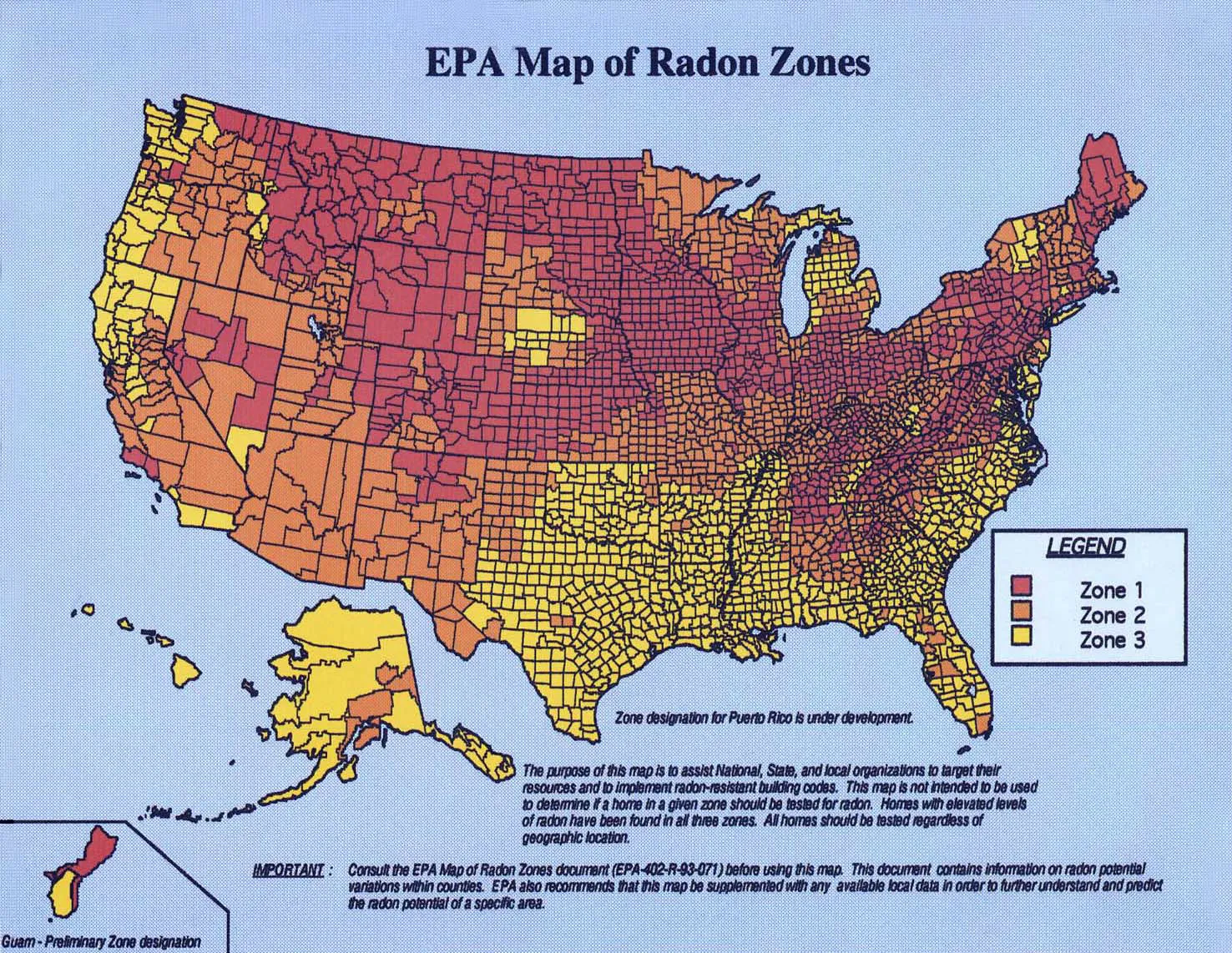
EPA Map of Radon Zones